Drain Cleaning in Guelph
Clogged drains, backed-up main lines, basement floor drains and root-blocked laterals across Guelph and Wellington County. Snaking, root cutting, hydro jetting and camera inspection by a licensed, insured local contractor. We find out what the blockage actually is before we quote a way to clear it.
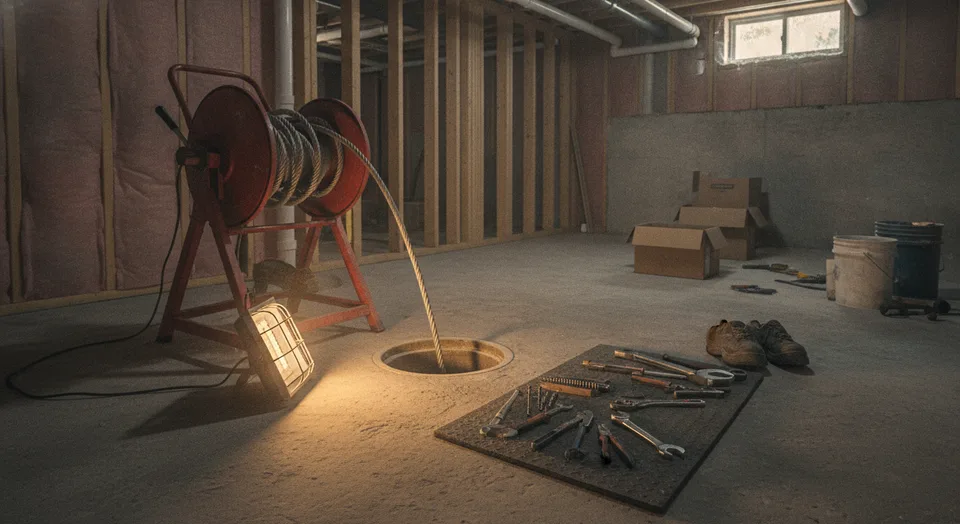
Guelph has two completely different drain problems, and which one you have depends almost entirely on when your street was built. In The Ward, downtown around St. George's Square, the Old University streets and Exhibition Park, the sewer laterals running from the house out to the main are old clay tile or cast iron. Clay came in short lengths with a joint every few feet, and every one of those joints is a place a root can get in. Those are the same streets with the biggest trees in the city. That combination — old jointed pipe under a mature canopy — is the single most common reason a Guelph house backs up more than once. In the newer subdivisions, Westminster Woods, Clairfields, Pine Ridge, Grange Hill East, the lateral is one continuous run of PVC and roots are almost never the answer. There it is grease, wipes, and venting that was never quite right. Out in Puslinch, Aberfoyle, Morriston, Eden Mills and Ariss you are usually on septic, which changes the diagnosis again. This is the booking line for a vetted Guelph drain and sewer contractor that works all three. Tell us what is backing up and where you are. You get a real diagnosis, in writing, before anybody starts cutting.
What We Clear
Sinks, tubs, toilets, floor drains and main sewer lines across Guelph — cabled, cut, jetted or scoped, depending on what is actually in the pipe.
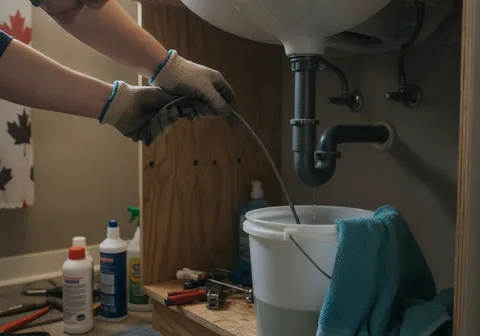
Clogged Drain Clearing
One fixture slow or stopped — kitchen sink, tub, toilet, laundry standpipe. Cabled to the blockage and cleared, with the cause explained.
Learn more →
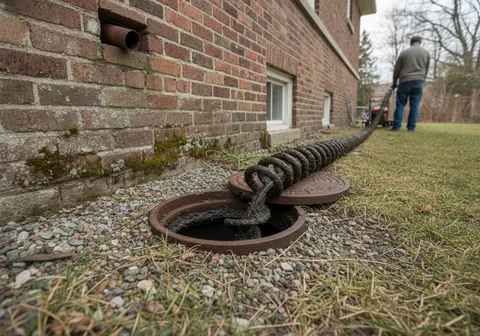
Main Sewer Line Cleaning
Whole-house backups, root-blocked clay laterals and repeat main line failures — cut, cleared, then scoped so you know whether it is coming back.
Learn more →
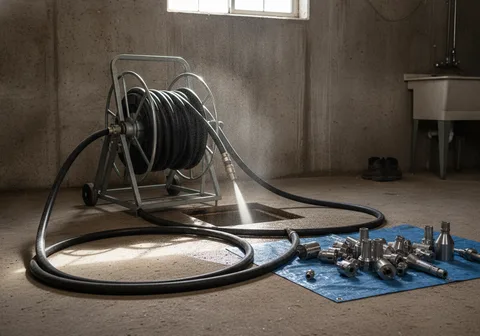
Hydro Jetting
High-pressure water that scours the pipe wall back to bare, for grease, scale, wipes and root regrowth that cabling only channels through.
Learn more →
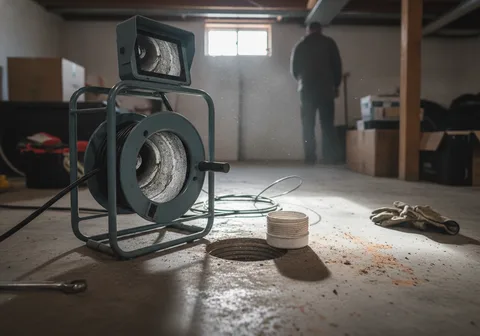
Sewer Camera Inspection
Scope the line, see the actual cause, and get the fault located to a measured distance and depth before anyone quotes a repair or a dig.
Learn more →
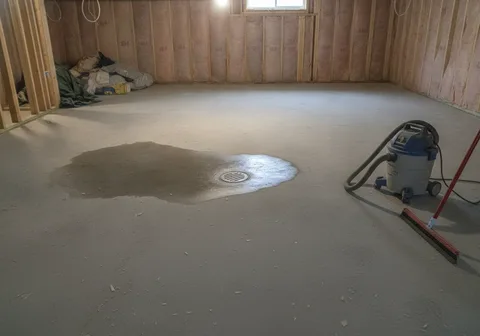
Basement Floor Drain Backups
Sewage coming up through the basement floor drain — what to do in the first ten minutes, what is actually causing it, and how to stop the repeat.
Learn more →
Drain Cleaning in Guelph: Why Your Street Decides the Problem
The Ward, downtown and the old core. St. Patrick's Ward east of the Speed, the blocks around St. George's Square, and the streets running off Macdonell and Wyndham are some of the oldest built-up land in the city. The houses there are on clay tile or cast-iron laterals. Clay does not rot, but it was laid in short sections with a joint at every coupling, and ground movement over a century opens those joints a few millimetres. That is all a root needs. Cast iron fails differently: the bottom of the pipe scales and then rots out from the inside, so the invert goes rough and rags and paper start catching on it. Both show up the same way to a homeowner — a floor drain that gurgles, a toilet that sinks slowly, a basement that backs up every spring. The fix is different for each, which is why the camera goes in before the quote goes out.
The tree canopy is the reason it keeps coming back. Guelph's older streets have a mature canopy — silver maple, Manitoba maple, willow, poplar and mature spruce sitting right over the line between the house and the road. Roots do not break a good pipe. They find a joint that is already open, follow the moisture and the nutrients, and then keep growing inside the pipe where conditions are perfect. Cut them out and the pipe flows again. Leave the joint the way it is and they come back, usually inside twelve to twenty-four months. Anybody who cables your line, takes your money and does not tell you that is setting you up for a repeat visit. The honest version is: here is the joint, here is how far out it is, here is what it costs to keep cutting it, and here is what it costs to stop doing that.
The newer south-end and east-end subdivisions. Westminster Woods, Clairfields, Pine Ridge and Grange Hill East were built with PVC laterals. One continuous run, glued joints, no gaps for roots. So when one of those houses backs up, roots are almost never the answer and cabling the main line is usually the wrong first move. What we find instead is grease in the kitchen branch, so-called flushable wipes matted in the horizontal run, and venting problems in houses with long basement bathroom runs and island sinks — the drain glugs, drains slowly, and smells, and that is air, not a blockage. Chasing a vent problem with a cable is how people end up paying twice.
Rural properties on septic: Puslinch, Aberfoyle, Morriston, Eden Mills, Ariss, Arkell. Once you are outside the city's sanitary system the diagnosis changes completely. A slow drain on a septic property might be a plugged line, or it might be a full tank, a failing baffle, or a saturated bed with nowhere left to go. Cabling the line when the tank is full solves nothing and can make a mess. So on rural calls the first questions are always the same: when was the tank last pumped, how many people are in the house now versus when the bed was sized, and is there standing water or unusually green grass over the field. Lines from the house to the tank still block the ordinary way, and those we clear like any other. Anything past the tank is a septic question, and you will be told that plainly instead of sold a drain cleaning.
How the call actually goes. You tell us what is backing up, roughly when the house was built, and whether it is one fixture or everything. One fixture is a branch line and it is usually straightforward. Everything at once, or a floor drain coming up when you run the washing machine, is the main line and it is treated as urgent. If sewage is on the floor right now, say so when you call — that moves ahead of routine work. The crew locates the cleanout, clears the line, and on any main-line call scopes it afterward so you can see what caused it. You get the footage and the distance measurement, not just a verbal assurance that it is fine now.
Serving Guelph & Surrounding Areas
Before anybody digs on your property, underground utilities have to be located — that is what Ontario One Call exists for, and it is free for the homeowner. Plumbing is a regulated trade in Ontario; you can verify a tradesperson's certification through Skilled Trades Ontario, and anyone working on your property should carry WSIB coverage. The sanitary sewer main in the street belongs to the City of Guelph — where responsibility for the lateral changes hands is a question worth asking the City directly before you assume a repair is yours or theirs. Guelph sits in the Speed and Eramosa watershed; the Grand River Conservation Authority is the authority on work near a watercourse.
Frequently Asked Questions
How much does drain cleaning cost in Guelph?
A straightforward branch line — a kitchen sink, a tub, a bathroom stack — is usually the cheapest thing on the list, and a main line cleared through an accessible cleanout sits above it. Root cutting on an old clay lateral costs more because it is slower and needs a bigger machine, and hydro jetting more again. What moves the number most is access: a house with a proper cleanout in the basement is a different job from one where the only way in is pulling a toilet. Planning ranges are on the 2026 cost guide, and you get a firm number before any work starts.
My whole basement backed up. Is that the main line?
Almost certainly. The test is simple: if only one fixture is slow, it is that fixture's branch. If the basement floor drain comes up when the washing machine drains, or the downstairs toilet bubbles when someone showers upstairs, everything is trying to get out through one restricted pipe and that pipe is the main. Stop running water, stop flushing, and call. Running more water into a blocked main is how a slow backup becomes a flooded basement.
Are tree roots really that common in Guelph?
In the older neighbourhoods, yes — it is the single most common cause of a main line that backs up more than once. The Ward, the downtown core, Old University and Exhibition Park have clay laterals with joints every few feet and very large mature trees directly over them. In the newer PVC subdivisions in the south end it is genuinely rare, and if someone tells you a fifteen-year-old house in Westminster Woods has a root problem, ask to see it on camera.
Will a bottle of drain cleaner from the hardware store fix it?
For a slow bathroom sink full of hair and soap, sometimes. For anything else, no, and there are two real costs. The first is that caustic cleaner sits in the trap doing nothing useful while the blockage stays where it is. The second is that the next person to open that line — and it is usually a technician with a face full of it — is dealing with a pipe full of chemical. If you have already poured some in, just say so when you call. Nobody will be annoyed; the crew will wear the right gear.
Do you put a camera down the line?
On any main line call, yes, and the footage is yours. Cabling clears a line, but it does not tell you whether you had a root mass at a joint, a section of pipe that has dropped, grease built up over years, or a crushed run under a driveway. Those have different price tags and very different futures. Scoping the line is how you find out whether you just bought a permanent fix or a twelve-month reprieve.
Which areas do you cover?
All of Guelph, including downtown and The Ward, Old University, Exhibition Park, Junction, Sunny Acres, Willow West, Brant, Riverside Park, the Grange Hill East side, and the south end through Westminster Woods, Clairfields, Kortright Hills and Pine Ridge. Outside the city we run to Rockwood, Eden Mills, Puslinch, Aberfoyle, Morriston, Arkell, Ariss, Fergus and Elora. Travel to the county is built into the quote up front, not added at the end.
Ready to Get Started?
Call 548-901-0034 or send the form for a written quote for drain cleaning in Guelph.